
World FTD Awareness Week runs from 28 September to 4 October 2026. Throughout the week, we will be sharing information about frontotemporal dementia, the experiences of people affected by it, and the research seeking to improve diagnosis, care and treatment.
What is Frontotemporal Dementia?
Dementia does not always begin with forgetfulness. Sometimes the first signs are changes in behaviour that feel difficult to explain. A previously tactful person may begin saying inappropriate things, or someone who was energetic and sociable may lose the drive to start even familiar activities. For others, the earliest change may be in language with everyday words becoming elusive, sentences being harder to construct, or conversations becoming increasingly difficult to follow.
These can all be signs of frontotemporal dementia (FTD). FTD is a term used to describe the clinical syndrome based on a combination of symptoms and biological indicators. Frontotemporal dementia is the clinical manifestation of pathological changes occurring in the brain, which we refer to as frontotemporal lobar degeneration (FTLD).
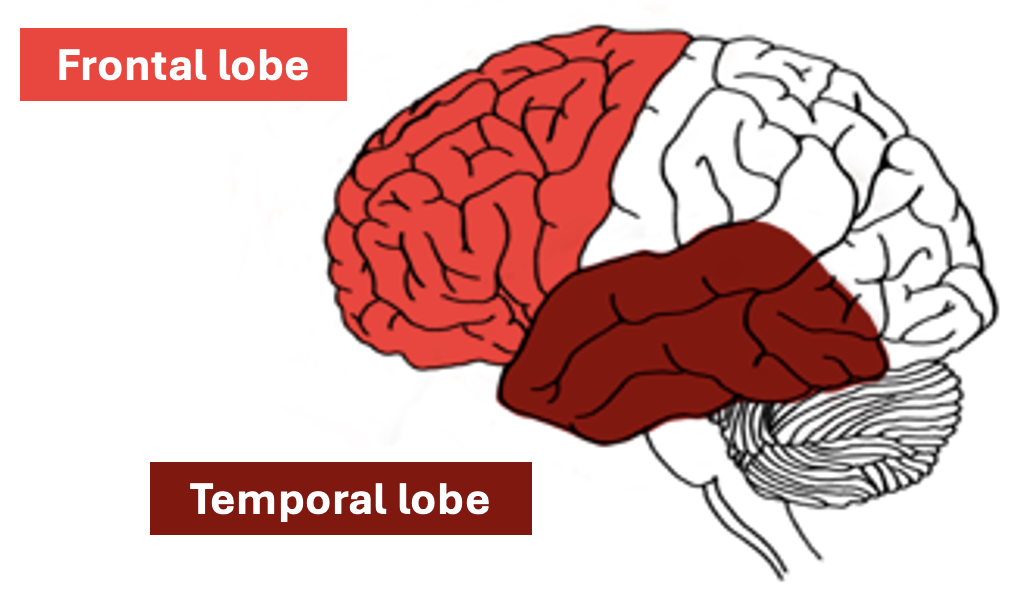
These conditions affect the frontal and temporal lobes of the brain, impacting the core functions that those brain cells were working to deliver. The networks in these areas help us plan, communicate, regulate our behaviour, and understand other people. In FTD, people experience progressive symptoms most defined by changes in behaviour and language.
FTLD and FTD are both ‘umbrella terms’. FTD sits within FTLD, along with some conditions instead primarily characterised by specific sensory and motor changes. Beneath the FTD umbrella lie a series of clinical subtypes, differing both in terms of their core symptoms and where in the brain the changes are concentrated. By giving a more specific diagnosis, people affected by the disease and their loved ones can become better informed about therapies and approaches for the current symptoms, and how to prepare for the journey ahead.
As memory can remain relatively intact early on in FTD, the condition does not always resemble the public’s familiar picture of dementia. Additionally, FTD tends to appear at a younger age than more common dementias. Many people are diagnosed between 45 and 65, although it also affects older and younger adults. Its occurrence in midlife can be especially disruptive, affecting employment, finances, parenting and relationships.
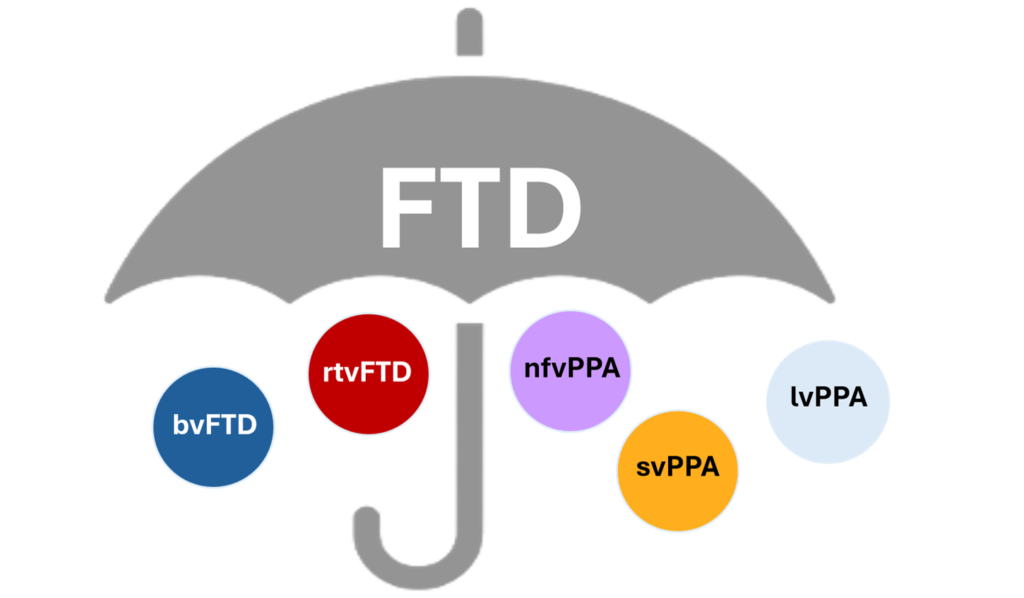
The most common presentation is behavioural variant FTD (bvFTD). A person may become impulsive, apathetic or unusually rigid in their routines. They might repeat the same actions, lose some of their sensitivity to other people’s feelings, or develop striking changes in food preferences. These changes reflect damage to the brain networks governing motivation and social behaviour, helping to explain why early FTD may be mistaken for depression, another psychiatric condition or a relationship problem.


When language is affected first and most prominently, clinicians call the syndrome primary progressive aphasia (PPA). “Aphasia” means difficulty producing or understanding language. “Primary” indicates that language is the main difficulty at the beginning, whilst “progressive” distinguishes PPA from the sudden language loss that can follow a stroke and highlights how the difficulty with language develops with time.
Clinicians recognise three main patterns, although not everyone fits neatly into one category.


In semantic variant PPA (svPPA) speech can remain fluent while the meanings of words and objects gradually become less accessible. A “sparrow” might become a “bird”, then an “animal”. This can affect the recognition of everyday objects, and lead to questions such as ‘what is this for?’ when faced with previously known items.

Diagnosis depends on the whole pattern of change as specialists combine the person’s account with observations from someone who knows them well, detailed cognitive and language assessments, neurological examination and brain imaging. Genetic testing or biomarkers may also sometimes help clarify the underlying cause.
There is currently no cure, but that does not mean there is no help. Speech and language therapy can develop practical ways to communicate, including writing, gesture and communication devices. Occupational therapy, predictable routines and support for families can make everyday life safer and more enjoyable.
A strong community of people across the world are pushing forward FTD research and treatments. This awareness week is a call through which we can amplify our efforts to raise awareness and understanding of FTD. On day 5 we will explore some of the research methods we can use to study FTD, and what they involve for participants.
Before that, come back on day 3 for a thoughtful piece written by someone with lived experience of a loved one being diagnosed with FTD. It is only through listening to the people most deeply affected by FTD that we can truly appreciate its effects and why the ongoing research is so important.